
If you want a steak that feels satisfying without wrecking your macros, the Dallas Filet is easy to notice. It’s one of the most popular picks for people chasing high protein with a lighter calorie load than bigger, fattier cuts.
Still, restaurant nutrition is never perfect math. Serving size, trimming, seasoning, and data sources can shift the totals a bit, so the numbers below are best used as a smart estimate you can plan around.
What you get in a Texas Roadhouse Dallas Filet
The Dallas Filet is a hand-cut tenderloin steak, seasoned and grilled to order. It’s known for being one of the most tender steaks on the Texas Roadhouse menu, which is a big reason people order it when they want steak without a heavy, greasy feel.
Because it’s a simpler cut, the nutrition picture is easier to understand than a loaded entree. You’re mostly looking at protein, fat, sodium, and whatever small carb count comes from seasoning or prep.
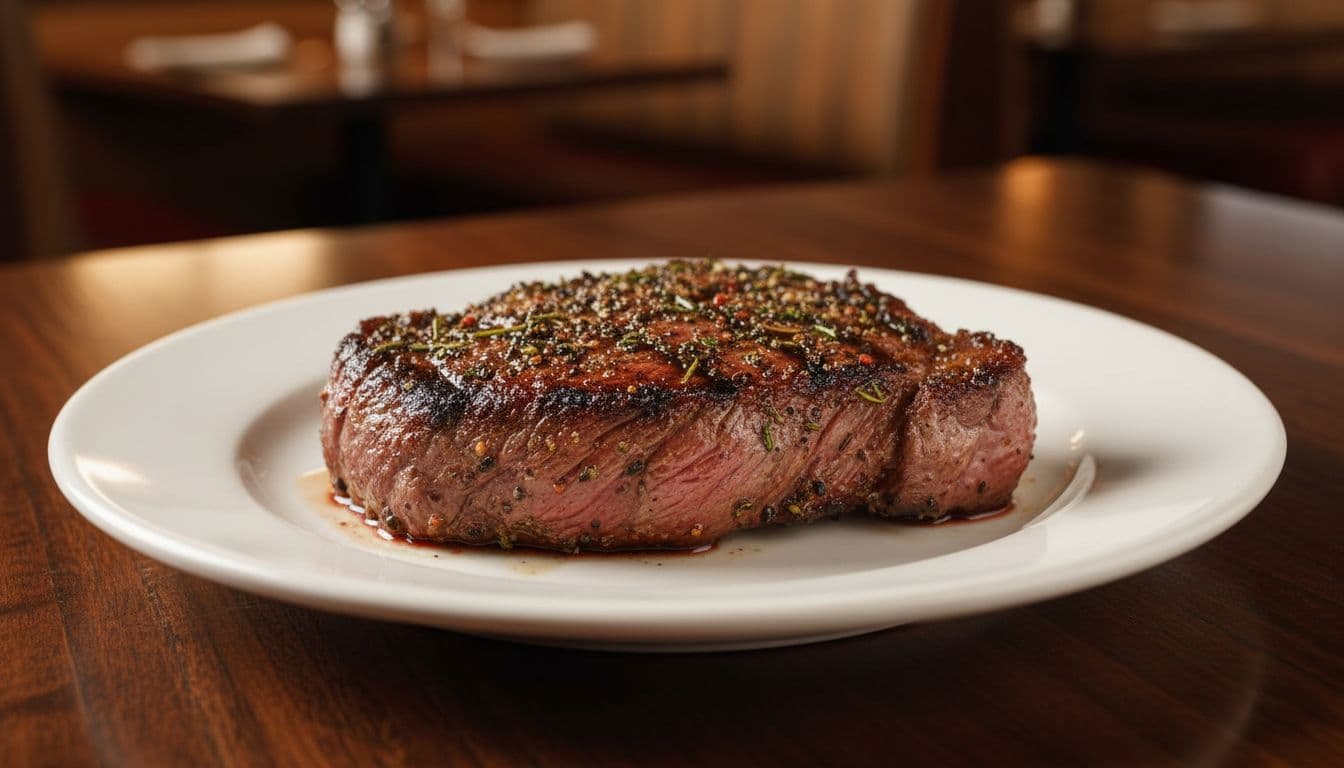
Why this steak is a favorite for protein-focused eaters
A filet works well when you want a meal that fills you up without a pile of carbs. Compared with many burgers, fried entrees, or steak plates loaded with toppings, this cut keeps the focus on protein.
That matters if you’re trying to hit a protein goal, keep lunch lighter, or build dinner around lower-carb sides. In plain terms, it’s steak that leaves you more room to manage the rest of your plate.
Why the nutrition can change from one order to another
No two steaks are trimmed in exactly the same way. A little extra fat, a heavier shake of seasoning, or a slightly larger cut can move the numbers.
Source differences also matter. For example, this 6 oz nutrition listing matches several published trackers, while other menu sites show small variations. That’s why it’s better to think in ranges, not rigid absolutes.
Calories and macros for the Dallas Filet
For most people, the useful comparison is simple: 6 oz versus 8 oz. Current published nutrition data points to the following estimates for those two portions.
| Serving | Calories | Protein | Fat | Carbs | Sodium | Cholesterol |
|---|---|---|---|---|---|---|
| 6 oz Dallas Filet | 270 | 45g | 10g | 6g | 720mg | 110mg |
| 8 oz Dallas Filet | 360 | 60g | 13g | 8g | 960mg | 145mg |
The big takeaway is easy to see. The larger cut adds a solid chunk of protein, but it also raises calories, fat, sodium, and cholesterol.
A plain filet is naturally carb-free, but published restaurant counts often show a few carbs from seasoning or prep.
6 oz Dallas Filet nutrition facts
The 6 oz Dallas Filet is the most commonly referenced portion, and it’s the easier one to fit into a calorie-controlled day. Most current sources put it at 270 calories, with 45 grams of protein, 10 grams of fat, 6 grams of carbs, 720 milligrams of sodium, and 110 milligrams of cholesterol.
That’s a strong protein return for the calories. You get roughly 45 grams of protein for fewer calories than many restaurant chicken dishes with sauce.
Carb counts are where people get tripped up. Steak sounds like a zero-carb food, and at home it often is. Yet published counts for this menu item usually show a small carb number, likely because of seasoning. If you eat low-carb, that still fits most plans without much trouble.
8 oz Dallas Filet nutrition facts
The 8 oz version is the better pick if you want more protein and don’t mind a bigger calorie hit. The most common estimates place it at 360 calories, with 60 grams of protein, 13 grams of fat, 8 grams of carbs, 960 milligrams of sodium, and 145 milligrams of cholesterol.
That makes the jump from 6 oz pretty clean. You’re adding about 90 calories and 15 grams of protein, plus a bit more fat and sodium. If dinner is your main meal, the 8 oz cut may fit well. If you’re working inside a tighter calorie target, the 6 oz is easier to manage.
For comparison, this 8 oz nutrition entry lines up with other menu trackers that place the larger steak around 360 calories.
How the macros fit different eating goals
For a high-protein plan, both sizes work well. The 6 oz serving gives you a lot of protein with modest calories, while the 8 oz pushes protein high enough to anchor a full dinner.
For low-carb or keto-style eating, the Dallas Filet is still a good fit, even if the listed nutrition shows a few carbs. In real life, the bigger issue usually isn’t the steak. It’s the rolls, loaded potato, sugary drinks, and extra toppings that change the meal fast.
If you’re tracking balanced macros, the filet is easier to pair with smart sides than a heavily marbled steak. Some published menu comparisons, like this Dallas Filet size breakdown, also show how close the two portions are in structure: mostly protein, moderate fat, and only a small carb count.
How to make the Dallas Filet fit your day
The steak itself is only part of the meal. What sits next to it can double the calories before you notice.
Watch the sides and add-ons
A plain filet is fairly lean for a steakhouse order. The problem starts when bread, cinnamon butter, loaded baked potatoes, fries, cheese, sauteed toppings, and sweet drinks pile on top.
If you’re tracking macros, count the whole plate, not only the steak. A smart steak choice can turn into a much heavier meal with just a few extras.
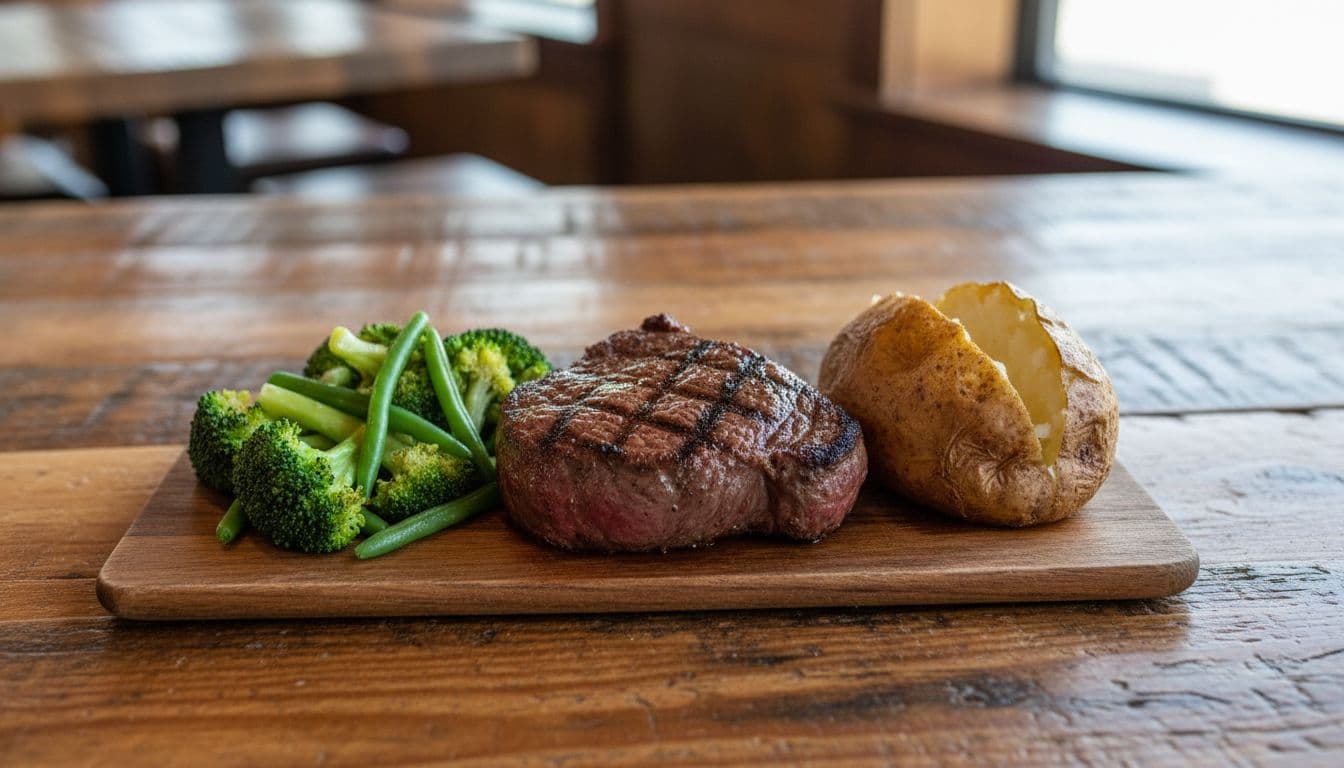
Simple ways to keep the meal lighter
Pick one lighter side, such as vegetables or a plain baked potato, and skip the heavy toppings. That one move can save a surprising number of calories.
You can also pass on extra butter, keep sauces on the side, or split a richer side with someone else. Small changes matter here because the filet already does a lot of the work for you.
Final thoughts
Texas Roadhouse Dallas Filet nutrition is easiest to sum up this way: it’s a strong high-protein steak choice with moderate calories, especially in the 6 oz portion. The 8 oz option gives you more protein, but the calorie and sodium jump is real.
The exact numbers can shift a little by source and prep. Still, if you treat these figures as solid working estimates, the Dallas Filet is one of the simpler steakhouse orders to fit into a thoughtful eating plan.